Where the Cloud Ecosystem is Heading in 2026: Top 5 Predictions
At the end of last year, we did a webinar with some friends from the cloud native community, including CNCF Ambassadors and project maintainers, and we discussed what 2026 could hold for the cloud ecosystem based on our experiences at KubeCon in Atlanta and what we’ve been seeing in the community. Based on that conversation, and the time I’ve had thinking about it over the holidays, I’m going to share my top 5 predictions on where I think cloud native is headed.
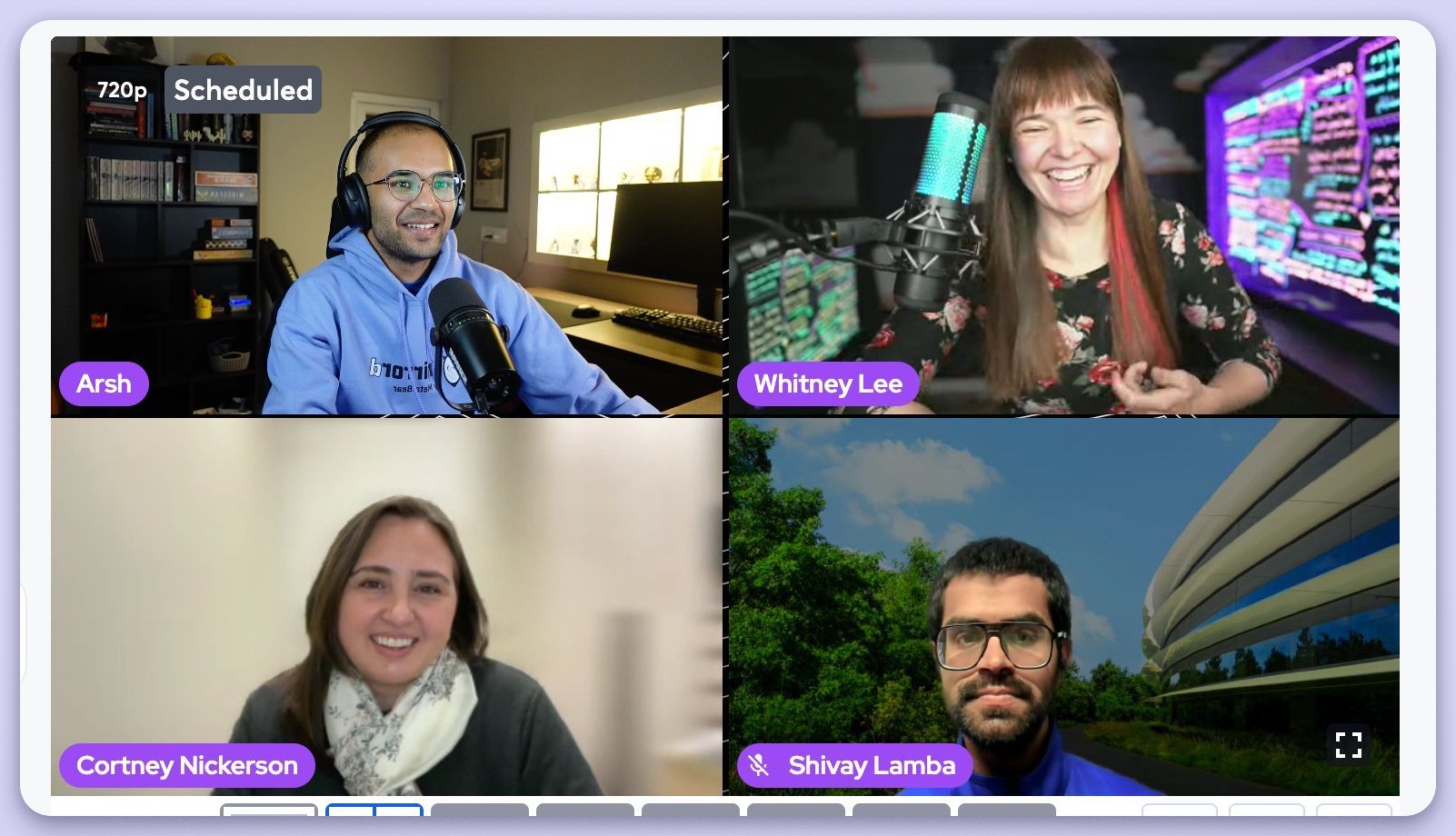
Screenshot from our webinar with CNCF Ambassadors and project maintainers
Questioning the value of AI
One of the remarkable differences between KubeCon London in April and KubeCon Atlanta in November was the way people reacted to AI announcements and features. In April at KubeCon, and even before that over the last few KubeCons, everyone was excited about all things AI. You could just mention those two letters together and have people coming in to hear what you were saying. All the sessions about AI were packed full of attendees.
Towards the end of the year, that started to change. People were a lot more skeptical about AI, often pausing to reflect on whether they even needed that particular feature, measuring the ROI of investing in it, and thinking about day 2 implications like security. While there didn’t seem to be a downward trend in the hype around AI, the way people approached it seemed more grounded. I think this trend will continue and further increase in 2026. We’ll see more people seriously evaluating AI-related advancements and features instead of jumping straight on the hype wagon.
Kubernetes takes a back seat
Seeing the kinds of projects that are currently growing in the cloud native ecosystem, I think it’s safe to say that Kubernetes itself has been taking a back seat. Projects like Crossplane, kro, and Kratix have been seeing a lot of adoption, and rightly so. What I kept hearing from everyone last year was how strongly teams felt about these projects once they’d adopted them. People talked about quicker onboarding, fewer things for developers to keep in their heads, and infrastructure that was finally easier to provision and manage across teams. The common theme was that these benefits compound over time, making it hard to justify returning to more ad-hoc, Kubernetes-first workflows.
That sentiment helps explain a broader shift we’re seeing. While Kubernetes remains the foundation, many organizations are deliberately choosing not to put it front and center for application developers. Instead, platform teams are wrapping that power behind abstractions and self-service APIs that match how developers actually work. By leaning on these abstractions rather than Kubernetes primitives, teams can move faster without losing control, which is why tools like Crossplane and IDPs are steadily becoming a standard part of modern platform stacks.
The death of local dev environments
Most developers might have already started seeing this, but I think 2026 will be the year where everyone acknowledges that local dev environments are just not enough. Increasing complexity of cloud applications, fueled by the adoption of AI coding agents, is highlighting one of the biggest bottlenecks in software delivery today: slow feedback loops. These slow loops are often caused because the local dev environments developers have don’t allow them to test their code in a production-like setting, leading them to wait for slow CI builds and staging environment access to test their code.
Switching from local dev environments to production-like cloud environments for development is a trend that will rise significantly in 2026. Projects like mirrord, Telepresence, and DevPod, which give developers easy access to production-like environments during development, will make local dev environments redundant.
The AI SRE dream seems closer to reach but still far from grasp
2026 will see more AI agents deployed on Kubernetes using tools like kagent, and increased use of projects like K8sGPT by SREs to make their lives a bit easier. But I still don’t think it will be the year where you start trusting agents to manage your cluster. Just like in software development, where we’ve seen AI coding agents become tools that make developers more powerful instead of replacing them, I think we’ll see the same for SREs.
I think projects like kagent will particularly take off because of their promise to build task-specific AI agents with controlled scope and permissions, instead of approaches where agents are given access to the entire cluster. As mentioned above, people are considering the security implications of AI much more seriously, which leads me to believe that demand for more specific and custom agents for managing clusters will increase compared to general-purpose agents.
Open source fatigue sets in
By open source fatigue I don’t mean to imply that open source would be going away, but I do think the way teams adopt open source projects in the cloud native landscape will change in 2026. Many organizations are hitting a saturation point: too many projects, overlapping tools, and unclear ownership internally after adopting projects. By 2026, I expect teams to be far more selective about what they bring in, even if a project is popular or CNCF-backed. Instead of constantly chasing the newest or most talked-about project, teams will increasingly gravitate toward tools that are well maintained, have clear roadmaps, and are backed by active, reliable communities. Adoption decisions will be driven less by hype and more by long-term maintainability. Questions like “who maintains this?”, “how active is the community?”, and “what happens if this project stalls?” will matter just as much as technical fit.
By 2026, I expect teams to be far more conscious of which projects they bring into their organization. Open source will remain central to cloud native, but ROI, stability, and sustained ownership will play a much bigger role in determining what actually gets adopted and used long term.
What this means for teams heading into 2026
If I were to sum all of these up, the excitement about AI and platform engineering of the past few years isn’t going away, but it’s being tempered by a much stronger focus on practicality, sustainability, and real-world outcomes. Teams are questioning whether a new technology is actually solving a problem, trying to abstract things which developers don’t need to deal with, and being far more intentional about the tools they adopt. For developers and platform teams, 2026 will likely be less about chasing what’s new and more about doubling down on what works.