5 Cloud Native Conferences Worth Attending in 2026
The cloud native ecosystem has evolved at a tremendous pace over the last few years, and as a result, the number of conferences around it has grown just as quickly. Every year, there are dozens of events promising deep technical talks, community connection, and insight into “what’s next,” to the point where it has become hard to tell how these conferences actually differ, what you’ll get out of each one, and which are worth prioritizing if you get a chance to attend.
Having attended and spoken at many of these events ourselves, we’ve seen firsthand that not all cloud native conferences serve the same purpose. Some are about breadth and ecosystem awareness, others are about deep technical learning, and some are really just about conversations and connecting with the community. This guide is our attempt to break that down and highlight five cloud native conferences in 2026 that are worth your time, while explaining what to expect from each one.
ContainerDays
When and where?
- London, February 11-12
- Hamburg, September 2-4
TL;DR: Attend if you want a smaller, deeply technical European cloud native conference where you can have conversations with practitioners, go deep on specific topics, and explore how cloud infrastructure is starting to intersect with AI workloads.
ContainerDays is one of those conferences that consistently feels built by practitioners for practitioners. It distinguishes itself from much larger, more commercial events like KubeCon by staying intentionally smaller, more focused, and deeply technical. With a fraction of the audience size (~1000 attendees) of mega-conferences, it’s much easier to have detailed conversations and spend time digging into topics instead of rushing between sessions.
Historically, ContainerDays has taken place in Hamburg, but 2026 marks the first time the conference is expanding to London as well. Another notable shift this year is its overlap with the AI space. Both the London and Hamburg editions are co-located with MCP-focused events, meaning you won’t just hear about cloud native in isolation, but how it’s increasingly intersecting with AI agents and emerging infrastructure patterns for LLMs.
If you want a European cloud native conference that prioritizes depth and community over sheer scale, ContainerDays is one of the best options to prioritize in 2026. We’ll have a booth at ContainerDays London, Jake from our team will also be giving a talk, so if you happen to attend the London edition, come say hi! :)
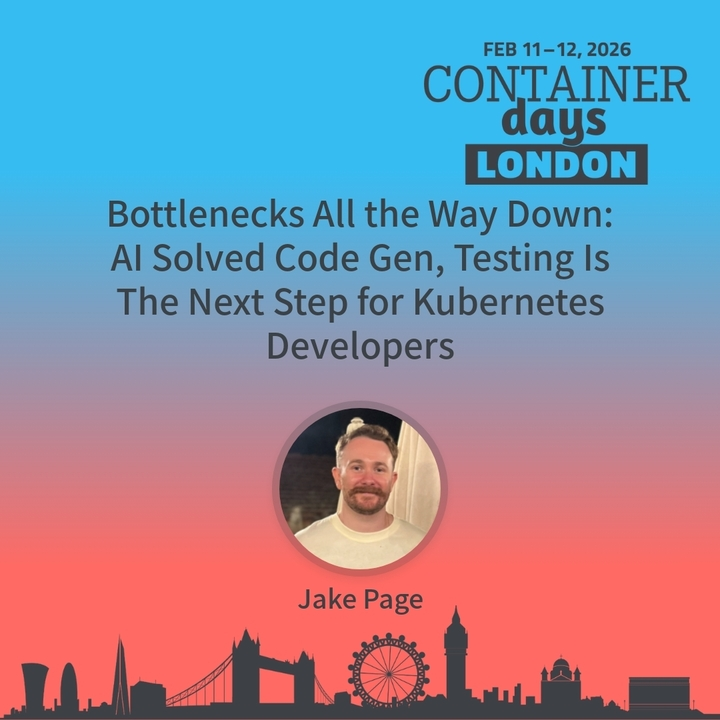
Jake's talk at ContainerDays London
DevOpsDays
- Multiple events throughout 2026, see details here
TL;DR: Attend if you want a community-run conference with minimal vendor noise, and a chance to build lasting connections with people working on similar problems in your local cloud and DevOps scene.
DevOpsDays is very different from the large conferences we’ve mentioned above, and that’s exactly the point. It isn’t organized by a cloud provider, a foundation, or a single vendor, and as a result, it avoids the constant product positioning that dominates events like re:Invent.
Each DevOpsDays event is local and community-run, which gives it a much more personal feel. The attendee list is smaller, the conversations are easier to join, and the topics tend to reflect what people in that region are actually working with day to day. The smaller size changes the networking dynamic completely, because instead of rushing between sessions or trying to get five minutes with someone after a talk, you actually have time to talk. And because the community is largely local, those connections often stick. For many people, DevOpsDays ends up being less about learning a specific technology and more about building relationships in their local region that last beyond the conference.
Another one of the biggest advantages of DevOpsDays is accessibility. Because events happen in so many cities around the world, it’s often possible to attend without long flights, expensive hotels, or a big conference budget. If you’re looking for something smaller and more community focused, DevOpsDays is an easy recommendation.
SREDay
- Multiple events throughout 2026, see details here
TL;DR: Attend if you want a conference centered on SRE and operating systems in production, with practical talks about incidents, trade-offs, and lessons learned from people doing this work every day.
SREDay sits in a very specific niche. It’s not trying to be a general cloud conference, and it’s not trying to cover everything under the sun. It’s focused solely on SRE and the realities of running systems in production, and you’ll see that in both the content and the crowd.
Like DevOpsDays, SREDay runs in multiple cities, which makes it more accessible than large, destination conferences. The content leans heavily toward real experiences. You’ll hear about incidents, postmortems, platform challenges, organizational trade-offs, and lessons learned the hard way. There’s a noticeable emphasis on post-incident learning and sharing failures openly, which makes the talks really useful for day-to-day work. The conference also usually runs with a single talk track, which means there’s no session FOMO and plenty of time for hallway conversations and networking.
If your work revolves around reliability, operations, or platform engineering, SREDay is one of the best places to learn from people facing the same problems. If you happen to attend the SREDay in New York (February 26) or the one in London (March 12), you’ll find speakers from the MetalBear team there!
The Obvious Ones
KubeCon + CloudNativeCon
When and where?
- Amsterdam, March 23–26
- Salt Lake City, November 9–12
TL;DR: Attend if you want a broad, ecosystem-wide view of cloud native, with multiple technical tracks for talks, strong open-source focus, and exposure to the people and projects shaping where Kubernetes and CNCF are headed next.
KubeCon + CloudNativeCon is the center of gravity for the cloud native ecosystem. This is where CNCF projects come together, and maintainers, vendors, and large-scale adopters all show up, giving you a clear sense of what matters across the ecosystem as a whole.
The scale is very different from smaller conferences like ContainerDays, where over the course of a few days you’ll likely run into the same people multiple times. At KubeCon, finding someone specifically can be hard, but in exchange, you’ll end up meeting far more new people in hallway conversations, side events, and spontaneous chats than you ever planned to.
One of KubeCon’s biggest strengths is how flexible the experience is. The schedule is split into dedicated tracks for areas like security, platform engineering, observability, AI, and core Kubernetes. You can choose to go deep on a single topic for several days in a row, or mix and match sessions across tracks to get a broader view of what’s happening across the ecosystem.
Unlike cloud provider–led events such as AWS re:Invent, KubeCon places a strong emphasis on open source and community. You’ll see sessions led by maintainers of the open source projects you’re likely already using, sharing new features, lessons learned, and deep dives into how those tools actually work under the hood.
Another important part of the KubeCon experience happens outside the official schedule. KubeCon is known for its after-parties, with multiple of them happening every night of the conference. This is often where a lot of valuable conversations and connections happen. If you’re attending, it’s worth keeping an eye out for these on websites like conferenceparties.com.
With all of this, KubeCon can definitely be overwhelming, but it’s also one of the few conferences we’d strongly recommend not skipping if you get the chance. We never miss a KubeCon, so if you’re attending in Amsterdam or Salt Lake City, come find us at our booth.
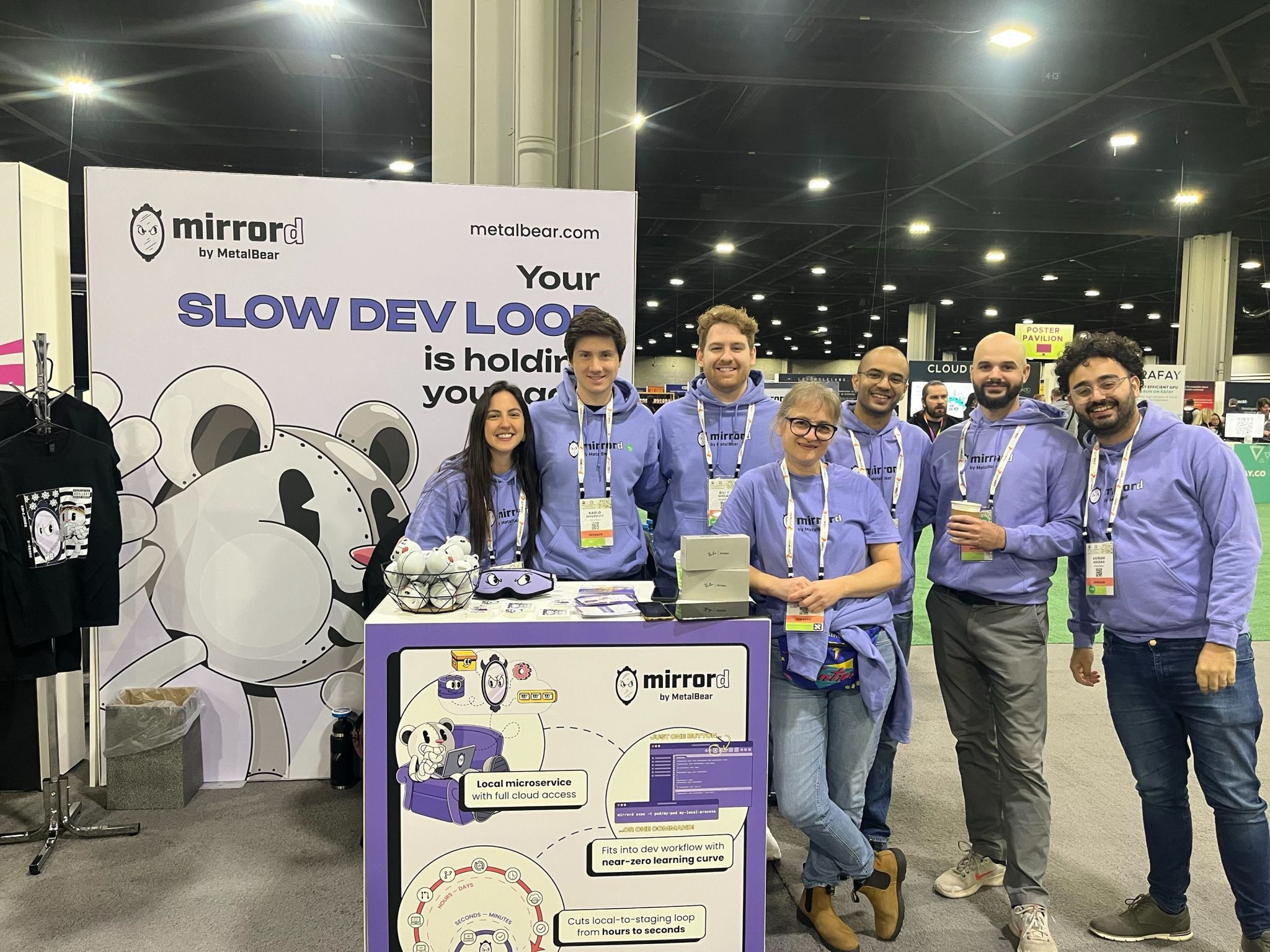
Photo of the MetalBear Team at KubeCon NA in Atlanta last year
AWS re:Invent
When and where?
- Las Vegas, November 30 – December 4, 2026
TL;DR: Attend if you want a first-hand view of upcoming AWS services, major product announcements, and the direction one of the largest cloud providers is pushing the industry.
AWS re:Invent is honestly in a category of its own. It’s significantly larger than KubeCon and feels less like a community conference and more like a full-scale industry event. With tens of thousands of attendees, massive keynotes, and hundreds of parallel sessions, re:Invent is where AWS lays out its vision for the future of cloud computing.
The focus is, surprise surprise, unapologetically AWS-centric. Talks, workshops, and announcements all revolve around AWS services, though it’s worth noting that getting into sessions can be difficult. Many talks require preregistration and fill up quickly, while walk-in sessions often have long lines. If you’re running workloads on AWS, this is where you learn what’s launching next and how Amazon expects you to use it.
The audience is broader than most cloud native conferences. You’ll see platform engineers and DevOps folks, but also enterprise architects, data teams, and decision-makers looking to standardize on AWS services or evaluate new vendors. The vibe is very different from KubeCon. re:Invent is highly polished, vendor-led, and marketing-heavy, closer to a large product expo than an open-source gathering. When our team attended re:Invent last year, one of us drove a Ferrari, another took part in BattleBots, and another watched a sumo fight in a nightclub. Yes, that’s the scale of marketing you should expect.
If AWS is a core part of your infrastructure, re:Invent is hard to ignore. But even if it’s not, attending gives you a clear view into where one of the largest cloud providers is investing, what problems it believes matter most, and how those decisions are likely to influence the wider cloud ecosystem.
How to choose what to attend in 2026
These are our recommendations for some really good conferences to attend in the cloud native space in 2026. The “best” cloud native conference really depends on what you’re trying to get out of it. If you want depth and practitioner-driven conversations, smaller events like ContainerDays, DevOpsDays, or SREDay will likely give you more value than a massive expo floor. If you want ecosystem awareness and a sense of where cloud native is heading overall, KubeCon is hard to beat. And while re:Invent is deeply AWS-focused, its sheer scale makes it one of the most influential cloud conferences overall, offering a clear view into where one of the largest cloud providers is investing and how those decisions shape the wider cloud ecosystem. Hopefully we’ll run into you at one of these events, keep an eye out!